
News
Because of concentration, one becomes professional; because of professionalism, one achieves excellence; because of excellence, one gains trust.
From "circuit carrier" to "computing power core", the PCB industry is embarking on a new starting point for technological upgrades.
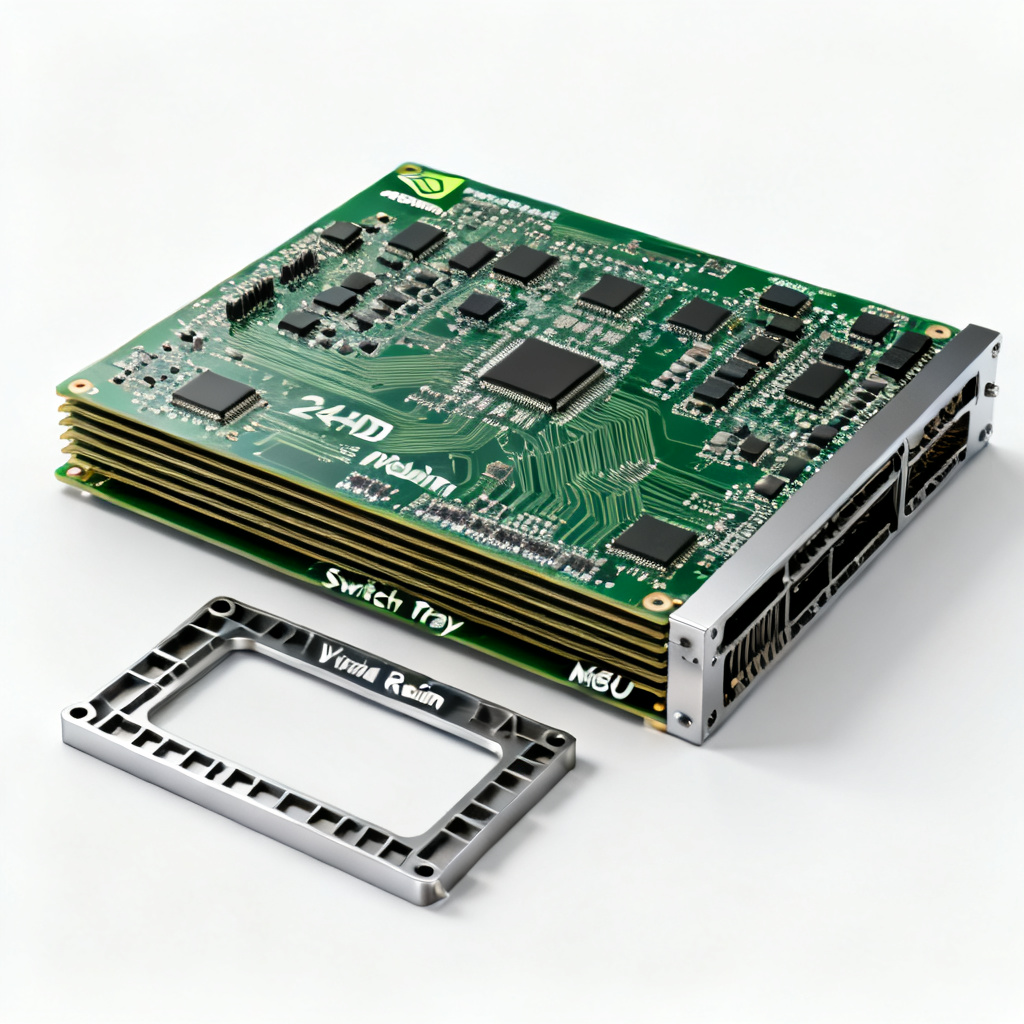
The in-depth evolution of AI technology is profoundly reshaping the technological paradigm of the PCB (Printed Circuit Board) industry. The latest research by TrendForce indicates that from the cable-free architecture of the NVIDIA Rubin platform to the high-level HDI design of self-developed ASIC servers by cloud giants, PCB is no longer merely a circuit carrier; instead, it has become the core layer for the release of computing power, officially entering the "three-high era" of high frequency, high power consumption, and high density.
The Rubin generation servers fully adopt cable-free interconnection design. The Switch Tray is made of M8U grade materials and has a 24-layer HDI board design. The Midplane and CX9/CPX introduce M9 grade materials, with the maximum number of layers reaching 104. The value of the PCB for a single server has increased by more than twice compared to the previous generation. This design logic has become a common language in the industry. Google's TPU V7, Amazon's Trainium 3, and other ASIC AI servers also adopt high-level HDI, low-Dk materials, and extremely low roughness copper foil.
In the fields of high-end multi-layer boards and advanced HDI, Chinese enterprises are accelerating their breakthroughs. Huilin Co., Ltd. has successfully mastered the mixed pressing process for M9-level high-speed materials and became the world's first manufacturer to pass NVIDIA's 78-layer M9-level orthogonal backplane certification in September 2025. After this technological breakthrough, the company plans to achieve large-scale mass production in the first quarter of 2026, and its 4.3 billion-yuan AI chip-supported high-end PCB expansion project is expected to start trial production in the second half of the year. Shenghong Technology has the manufacturing capability for multi-layer printed circuit boards above 100 layers, and has achieved mass production of products above 70 layers. Shenzhen Nan Circuit has also achieved mass production of 22-layer and below products on FCBGA packaging substrates, and the research and development of 24-layer and above products is progressing on schedule. In the ultra-high-rise PCB backplane field, the 70-layer + Midplane/orthogonal backplane technology has completed testing and entered the stage of production preparation, with the inter-layer error controlled within ±5 microns.
Technological innovation is also reflected in the material end of the upstream part of the industrial chain. To meet the high-frequency and high-speed transmission requirements of AI servers, Q cloth, with its extremely low dielectric constant and dielectric loss factor, has become the core reinforcing material for M9 materials. Japanese Nittobo has invested 1.5 billion yen to expand the production of T-glass, which is in short supply. It is expected to start mass production by the end of 2026, with production capacity increasing threefold compared to the current level. In the copper foil sector, low-roughness HVLP4 copper foil has become the mainstream, but the supply is in a long-term tight situation, and the industry's bargaining power is gradually flowing back from the downstream complete machines to the upstream material end.
TrendForce believes that in 2026, PCB will mark a new starting point where "technical content drives value". The competitive logic of the PCB industry has completely shifted from cost orientation to performance orientation. The industry will converge towards a few high-end suppliers with strong technical capabilities, high yield rates, and capital expenditure capabilities.
Navigation
- The EU's environmental protection sword is held high, and Chinese PCB export enterprises are accelerating their efforts to comply with regulations and break through the barriers.
- From "circuit carrier" to "computing power core", the PCB industry is embarking on a new starting point for technological upgrades.
- The computing power of artificial intelligence has driven up the demand for high-end PCBs, and the global market size is expected to exceed 95 billion US dollars by 2026.
Send Us A Message