News
Because of concentration, one becomes professional; because of professionalism, one achieves excellence; because of excellence, one gains trust.
The EU's environmental protection sword is held high, and Chinese PCB export enterprises are accelerating their efforts to comply with regulations and break through the barriers.
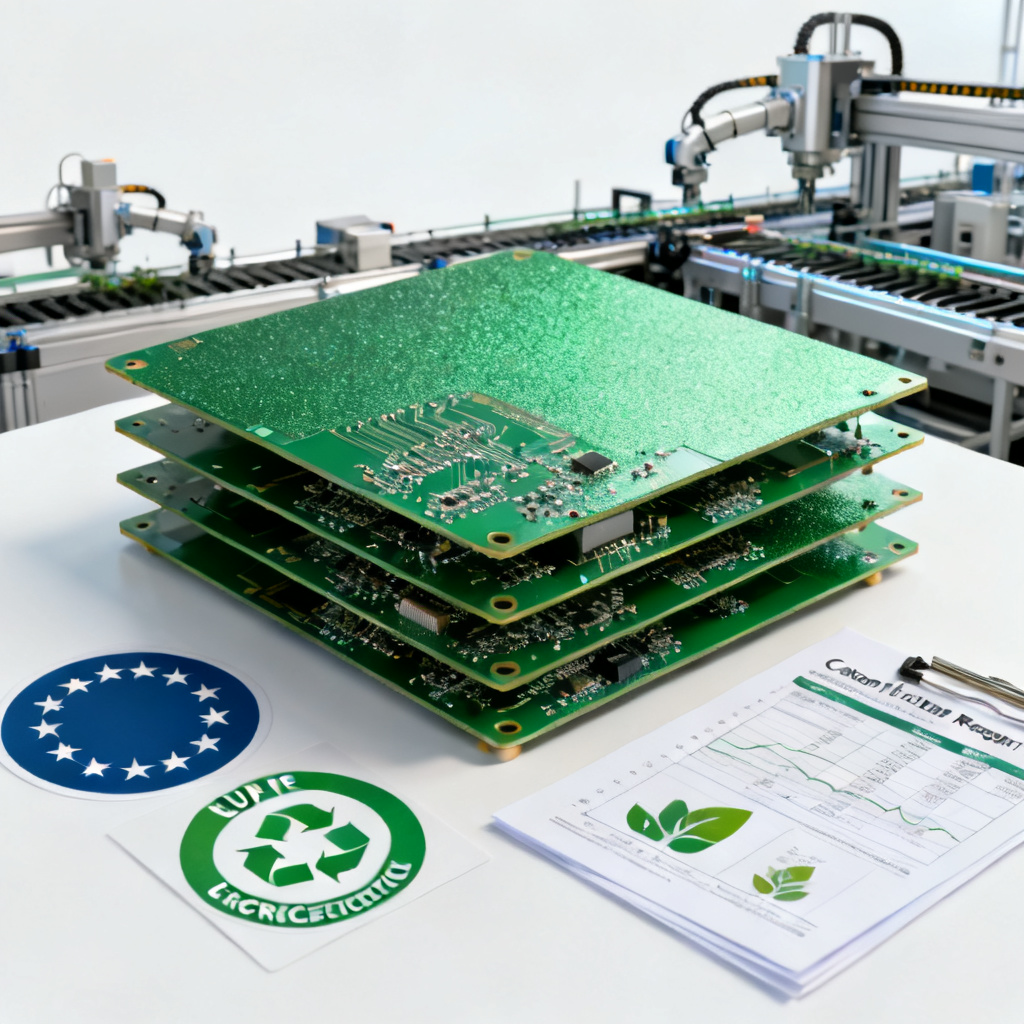
In 2026, a series of global environmental protection regulations will be implemented, and Chinese PCB export enterprises are facing unprecedented compliance challenges. On January 1, 2026, the EU's "Sustainable Product Eco-design Regulation" (ESPR) officially came into effect. On March 18, the European Commission released its first compliance report, showing that the compliance rate of global electronic and electrical enterprises with ESPR was only 58%. Among them, the compliance rate of Chinese electronic enterprises exporting to the EU was less than 40%, far below the global average. Within three months, the EU customs cumulatively detained 12,000 batches of non-compliant electronic products, of which Chinese products accounted for 62%, involving an amount of over 800 million euros, mainly including small and medium-sized PCB, PCBA processing and other products from the Pearl River Delta region.
The report indicates that the main reasons for the low compliance rate of PCB enterprises in China can be summarized into three aspects: Firstly, the full life cycle accounting of carbon footprint is not standardized. 42% of the enterprises failed to submit reports in accordance with the PEF format; Secondly, the data accuracy does not meet the standards. 38% of the enterprises have an error rate of carbon footprint data exceeding 5%, among which the proportion of Chinese enterprises is as high as 65%; Thirdly, the supply chain collaboration is insufficient. 29% of the enterprises cannot provide carbon footprint certificates of upstream raw material suppliers.
The regulatory thresholds are still rising. The EU will release specific standards for carbon footprint limits of electronic and electrical products in June 2026. The carbon footprint limit for PCB products will be set at no more than 8 kg CO₂eq per square meter, and the annual carbon emission limit for AI servers will not exceed 1200 kg CO₂eq. At the same time, the compliance supervision of the EU RoHS directive continues to tighten. In early 2026, China's RoHS will expand the controlled substances from 6 items to 10 items, adding 4 phthalate substances and introducing mandatory control of TBBPA/SCCP. In 2026, the EU carbon border adjustment mechanism will be fully implemented. PCB enterprises will face increased carbon cost pressure, with the carbon emission of multilayer boards per square meter being approximately 30-50 kg CO₂e. High carbon-emission enterprises will be subject to additional tariffs of approximately 70-90 euros per ton of CO₂e.
In the face of the severe compliance situation, major industrial provinces in China have intensively introduced assistance policies. Guangdong Province has issued the "ESPR Compliance Assistance Action Plan for Electronic Enterprises", offering a 50% cost subsidy to enterprises that entrust third-party institutions to conduct carbon footprint accounting. The subsidy for each enterprise is up to 50,000 yuan. The green transformation of the PCB industry is accelerating, and the PCB Industry Standards and Conditions issued by the China Electronic Circuit Industry Association require that R&D investment be no less than 3% of revenue and water reuse rate be no less than 95%. Domestic nano-coating and other zero-VOC environmental protection protection solutions are also being rapidly introduced into export orders, helping enterprises avoid environmental protection sanctions.
Industry experts have pointed out that the cost of non-compliance with environmental protection regulations after 2026 will be significantly higher than the cost of switching to an environmental protection plan. They recommend that export enterprises incorporate full lifecycle carbon footprint management and the application of environmentally friendly materials into the PCB design stage, in order to secure the core market share in the EU and gain the initiative in the global green supply chain reconfiguration.
Navigation
- The EU's environmental protection sword is held high, and Chinese PCB export enterprises are accelerating their efforts to comply with regulations and break through the barriers.
- From "circuit carrier" to "computing power core", the PCB industry is embarking on a new starting point for technological upgrades.
- The computing power of artificial intelligence has driven up the demand for high-end PCBs, and the global market size is expected to exceed 95 billion US dollars by 2026.
Send Us A Message