
News
Because of concentration, one becomes professional; because of professionalism, one achieves excellence; because of excellence, one gains trust.
The computing power of artificial intelligence has driven up the demand for high-end PCBs, and the global market size is expected to exceed 95 billion US dollars by 2026.
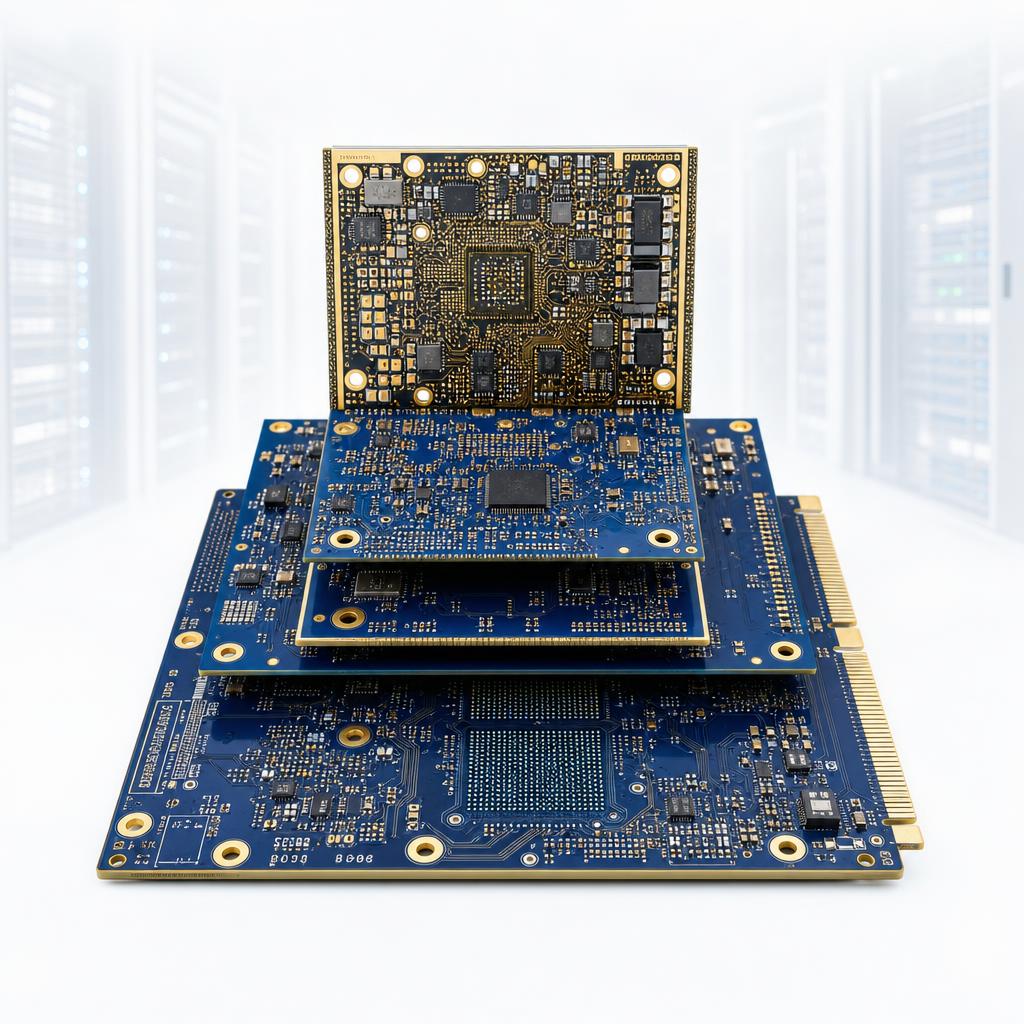
Since 2026, the printed circuit board (PCB) industry has entered a historic boom period. Driven by the continuous expansion of capital investment in AI infrastructure, the global PCB market achieved a year-on-year growth of 15.8% in 2025, reaching a scale of 85.2 billion US dollars. It is expected to further increase by 12.5% in 2026, exceeding 95.8 billion US dollars. Prismark pointed out that the main driving force of this round of growth comes from the expansion of capital expenditure in AI data centers, high-speed networks and satellite communications, which directly promoted the explosive growth in the demand for packaging substrates, HDI boards, server high-density boards, switches, optical modules and related PCBs.
In terms of market segments, packaging substrates led the pack with a compound annual growth rate of 10.9% from 2025 to 2030. HDI boards and multilayer boards followed closely, with significantly higher growth rates compared to traditional Commodity PCBs. Among them, the PCB demand in the server/data storage sector showed particularly strong growth, increasing by 43.6% in 2025 and achieving a compound annual growth rate of 17.2% from 2025 to 2030. According to statistics from DOWNGWU Securities, the global market size of AI server PCBs will increase from 3 billion US dollars in 2024 to over 20 billion US dollars in 2027, with a year-on-year growth rate of over 100% in 2026.
The situation of insufficient supply has begun to drive the prices of the industry to continue rising. Since May, the prices of raw materials such as upstream copper plates, high-end copper foils, electronic fabrics, and special resins have continued to increase, leading to a simultaneous rise in the prices of PCB products. The high-speed and high-frequency products for AI computing power have seen the largest price increases, and the delivery times have generally extended to several months. The industry presents a structural price increase feature of "high-end strong increase, mid-range follows the increase, and low-end weak stability", which is essentially the combined effect of the urgent demand for AI computing power and the delayed expansion of production capacity.
In response to the market situation of insufficient supply, the leading domestic PCB manufacturers have already sounded the alarm for expansion. According to the statistics from CITIC Securities, the total investment of the leading domestic PCB enterprises from 2025 to 2026 is expected to reach 41.9 billion yuan. The expansion direction is highly focused on high-end fields such as AI servers, high-frequency and high-speed, and packaging substrates. Among them, the total investment plans announced by only three leading enterprises, such as Shenghong Technology, Hualin Co., Ltd., and Pengding Holdings, have already exceeded 40 billion yuan. Shenghong Technology has proposed the largest expansion plan in the industry, with an investment total of no more than 20 billion yuan in 2026, of which approximately 14.8 billion yuan is precisely invested in capacity expansion and upgrading of high-end production lines.
Industry analysts predict that this round of price hikes will continue until 2027, and the supply-demand gap for high-end products will persist. In the future, the PCB industry will undergo a comprehensive transformation from "scale competition" to "technology competition", and focusing on high multilayer boards, high-frequency and high-speed, IC carrier boards, and high-grade HDI and other high-end technology tracks will become the key to enterprises' success.
Navigation
- The EU's environmental protection sword is held high, and Chinese PCB export enterprises are accelerating their efforts to comply with regulations and break through the barriers.
- From "circuit carrier" to "computing power core", the PCB industry is embarking on a new starting point for technological upgrades.
- The computing power of artificial intelligence has driven up the demand for high-end PCBs, and the global market size is expected to exceed 95 billion US dollars by 2026.
Send Us A Message